
If you feel that your forehead is too large or your hairline sits higher than you would like, you may have considered two possible solutions: forehead reduction surgery and hair transplantation.
Both procedures can create the appearance of a lower hairline and improve facial proportions. However, they work differently, and choosing between them involves more than deciding how much you want to reduce your forehead.
As a plastic surgeon in Medellín, Colombia, I believe the starting point should always be understanding your anatomy. Is your hairline naturally high, or has it gradually moved backward? Is your scalp flexible enough for surgical advancement? Do you have sufficient hair density?
In this article, I want to explain the differences between forehead reduction vs hair transplant, including who may benefit from each procedure, what results to expect, and which factors should guide your decision.
Forehead Reduction vs Hair Transplant: What Is the Main Difference?
The fundamental difference is how each procedure changes the position or appearance of your hairline.
Forehead Reduction Surgery: Lowering Your Existing Hairline
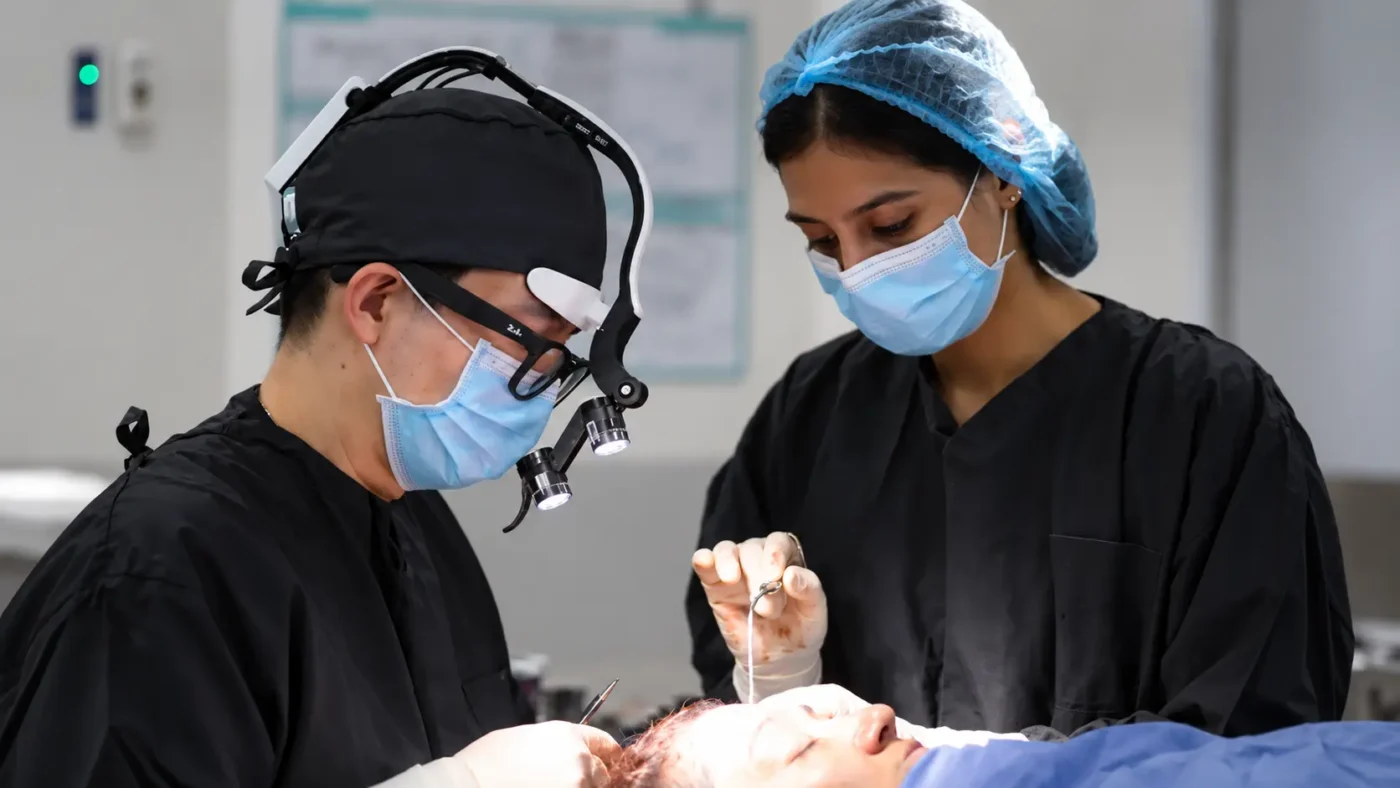
Forehead reduction surgery, also known as hairline lowering surgery or scalp advancement, reduces the visible height of the forehead by moving the hair-bearing scalp forward.
During the procedure, an incision is made near the natural hairline, a section of forehead skin is removed, and the scalp is carefully advanced to its new position.
This technique allows the existing hairline to move downward without relying on transplanted follicles to establish the new frontal border.
However, the amount of advancement depends on anatomical conditions, particularly scalp elasticity.
Hair Transplantation: Creating or Reconstructing the Hairline
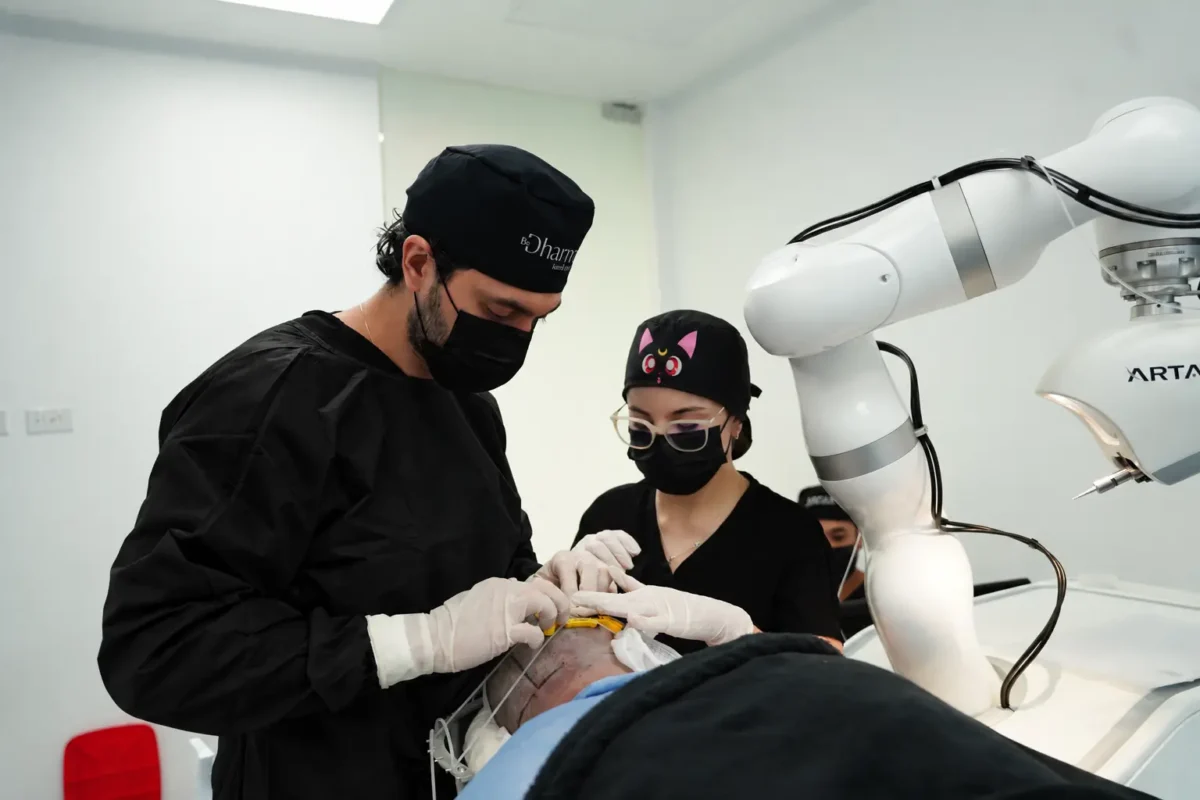
A hair transplant takes healthy follicular units from a donor area, usually the back or sides of the scalp, and places them in areas where greater coverage or a different hairline shape is desired.
Unlike forehead reduction, this procedure does not remove forehead skin or advance the entire scalp.
Instead, it redistributes existing hair follicles to create a new frontal border, restore thinning areas, or address recession around the temples.
The available donor hair and its quality are essential because transplantation cannot create an unlimited supply of follicles.
Forehead Reduction vs Hair Transplant: Key Differences at a Glance
| FACTOR | FOREHEAD REDUCTION | HAIR TRANSPLANT |
|---|---|---|
| Main objective | Reduce forehead height | Restore or reshape the hairline |
| Technique | Advances the existing hair-bearing scalp | Transfers hair follicles |
| Often considered for | Naturally high, stable hairlines | Receding hairlines, thinning or contour changes |
| Important anatomical factor | Scalp elasticity | Donor hair availability and quality |
| Visible change | Hairline is repositioned during surgery | New hair growth develops gradually |
| Scarring | Incision along the frontal hairline | Small donor and recipient scars, depending on technique |
| Long-term planning | Requires consideration of future hair loss | Requires consideration of future hair loss and donor reserves |
Neither procedure is automatically the better choice. Their suitability depends on what is causing the appearance of a large forehead and what changes are realistically achievable.
Why Your Hairline Is High Matters More Than You Think
One of the most important distinctions I consider is whether the patient has a naturally high hairline or an acquired change caused by hair loss.
Some people have had a large forehead since childhood. Their frontal hairline has remained relatively stable, and the hair immediately behind it may have good density.
Others notice that their forehead seems to become larger over time. In these cases, the change may be related to progressive hair loss, thinning, or recession around the temples.
These situations require different considerations.
A naturally high forehead does not necessarily mean that hair transplantation is needed. Similarly, a receding hairline should not automatically be treated with forehead reduction surgery.
The underlying cause needs to be evaluated before selecting either procedure.
CLINICAL ASSESSMENT
FIVE FACTORS I EVALUATE BEFORE RECOMMENDING FOREHEAD REDUCTION
When discussing hairline lowering with patients, I do not begin by deciding how many centimeters we should move the hairline. I first evaluate whether the proposed change is anatomically appropriate.
These are five important factors in that assessment:
Hairline Position and Stability
Has the hairline always been high, or has it receded? A stable frontal hairline is particularly important when considering scalp advancement.
Scalp Elasticity
Forehead reduction requires sufficient scalp mobility to bring the hairline forward without excessive tension. Limited elasticity can restrict the achievable reduction.
Hair Density and Distribution
A patient with dense hair behind a naturally high hairline has different needs from someone with diffuse thinning or significant temporal recession.
Current and Future Hair Loss
Family history, existing thinning, and possible conditions affecting the follicles must be considered. Some patients require diagnosis or medical management before cosmetic surgery.
Facial Proportions and Expectations
The goal is not necessarily to create the lowest possible hairline. Its shape and position should be planned according to the forehead, eyebrows, temples, and overall facial structure.
DR. DAVID DELGADO’S APPROACH
For me, the most important outcome is a hairline that remains appropriate for the patient’s anatomy and anticipated changes over time.
When Does Forehead Reduction Surgery Make More Sense?
Forehead reduction may be worth considering when the primary concern is the height of the forehead rather than missing or thinning hair.
For example, a patient may have a naturally high hairline, adequate frontal density, no evidence of progressive hair loss, and sufficient scalp elasticity.
In this situation, advancing the existing hairline may address the concern without needing to construct an entirely new frontal border through transplanted follicles.
The procedure can produce an immediate change in hairline position, although swelling, incision healing, and scar maturation take additional time.
Nevertheless, not everyone with a naturally high forehead qualifies. Prior scalp surgery, reduced tissue mobility, certain hair-loss conditions, and individual healing factors may affect the decision.
When Might a Hair Transplant Be More Appropriate?
Hair transplantation may make more sense when the primary concern involves missing hair, recession, or insufficient density rather than forehead height alone.
It can be considered for patients who want to:
A hair transplant can also offer flexibility in shaping specific areas of the frontal border, although the achievable density depends on the available donor follicles.
An important limitation is that transplantation does not stop ongoing androgenetic hair loss. Clinical guidelines emphasize assessing donor quality, planning for future hair-loss progression, and considering continued medical management when indicated. (Mysore et al., 2021).
This is why a long-term hair restoration plan matters just as much as the initial appearance.
Scars, Recovery, and Results: What Should You Expect?
These are often deciding factors for patients comparing forehead reduction surgery and hair transplantation.
What About Scarring?
With forehead reduction, the incision follows the frontal hairline. Although surgical techniques aim to make the scar less noticeable, its visibility can vary according to healing, hair characteristics, skin type, and surgical tension.
With hair transplantation, scarring depends on the extraction technique. Follicular Unit Excision (FUE) typically leaves small, distributed marks in the donor area, while strip harvesting produces a linear donor scar. Recipient sites also undergo healing.
Neither procedure should be described as completely scar-free.
A 2026 systematic review involving 3,213 patients undergoing forehead reduction reported complications including scarring, temporary sensory changes, and localized hair loss. The evidence reinforces the importance of informed consent, although study differences limit how precisely pooled findings predict an individual’s outcome. (Alabdulkarim et al., 2026).
RECOVERY & RESULTS
How Does Recovery Compare?
Forehead Reduction
With forehead reduction surgery, the new hairline position is visible relatively early.
Swelling, tenderness, changes in forehead sensation, and incision healing require postoperative care.
Scar maturation continues over several months as the surgical area heals.
Hair Transplantation
Patients initially experience small healing sites in the donor and recipient areas.
Some transplanted hairs may shed during the early healing process before new growth becomes visible.
Hair growth is gradual, and the final appearance can take approximately 9–12 months or longer to develop, depending on the individual.
Therefore, the difference is not simply which surgery offers a faster recovery. It is also when you can begin evaluating the aesthetic result.
Can Forehead Reduction and Hair Transplantation Be Combined?
In selected patients, both procedures may have complementary roles.
For example, someone may benefit from lowering a naturally high hairline through scalp advancement but still need refinement of the frontal border or temporal areas.
Hair transplantation may be considered later to address those specific concerns.
However, combining procedures is not routinely necessary. The decision requires careful planning around scalp healing, donor availability, scar position, and long-term hair stability.
Forehead Reduction or Hair Transplant in Colombia: Where to Start?
If you are considering either procedure, my recommendation is to begin with a medical evaluation rather than selecting a technique based solely on before-and-after photographs.
Forehead Reduction with Dr. David Delgado
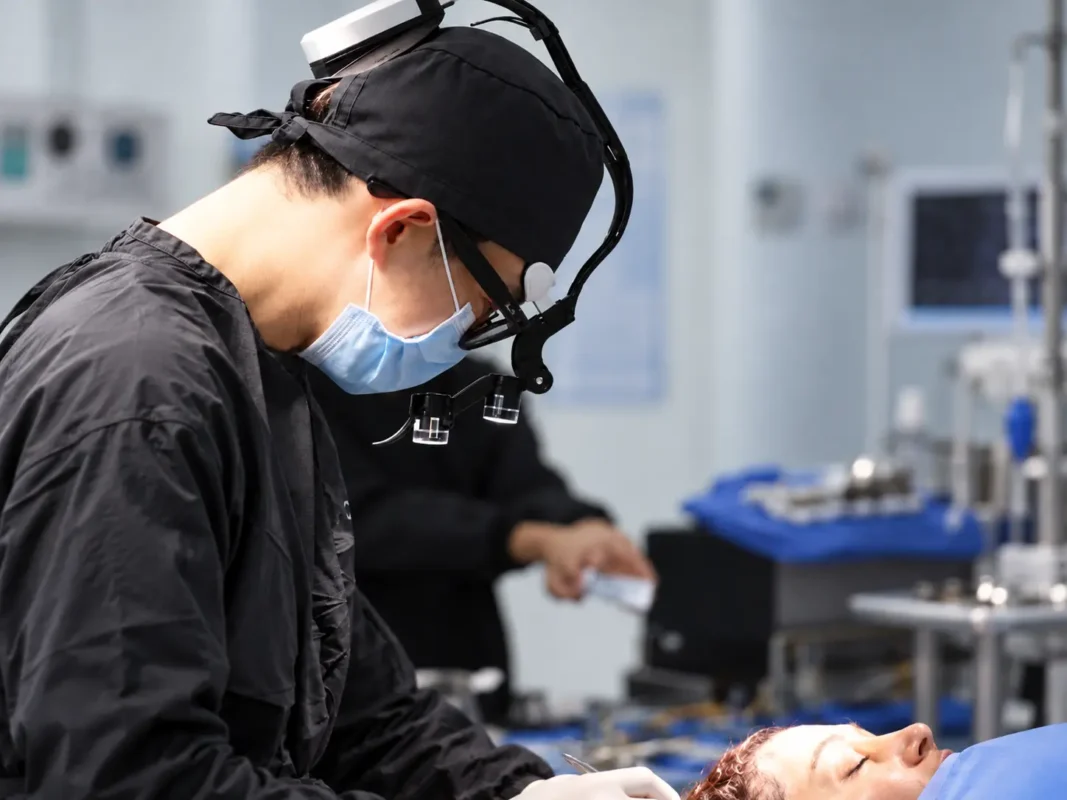
As a plastic surgeon trained at Universidad Industrial de Santander (UIS) and Universidad de Antioquia, and a member of the SCCP and ASPS, my approach to forehead reduction focuses on anatomical assessment, personalized surgical planning, and realistic expectations.
I perform my surgical procedures at Interquirófanos in Medellín, a facility accredited by Joint Commission International (JCI).
During a consultation, I can evaluate your forehead proportions, frontal hairline, scalp mobility, and whether surgery is appropriate for your goals.
Patients traveling from outside Colombia can also request an initial virtual consultation.
Hair Transplantation at Be Dharma Hair in Medellín
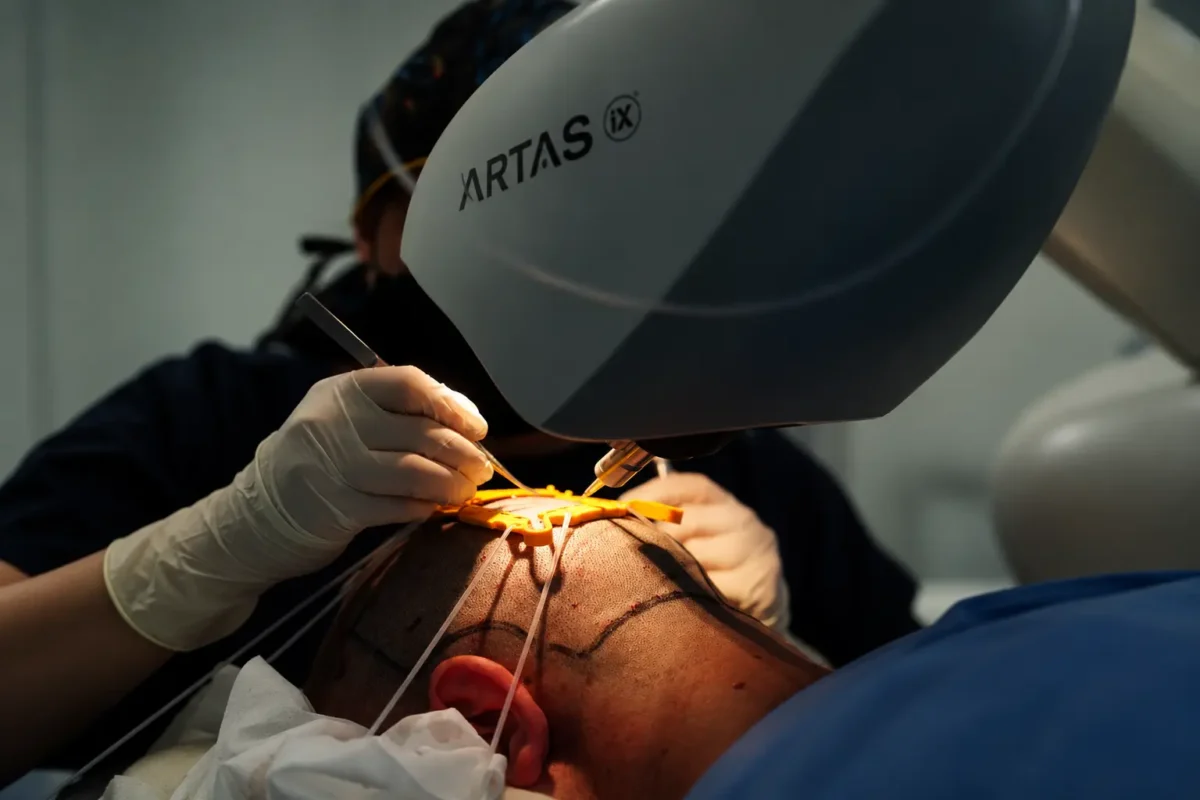
For patients whose primary concern is hair loss, insufficient density, or reconstruction of the frontal hairline, Be Dharma Hair offers specialized hair restoration services in Medellín, Colombia.
Its medical team evaluates hair-loss patterns, donor characteristics, and treatment options, including FUE transplantation and robotic-assisted procedures using ARTAS iX technology.
The assessment and hair transplant procedure are carried out by the specialized hair restoration team.
Both approaches begin with the same principle: understanding the patient before recommending a procedure.
Final Thoughts: The Right Procedure Starts With the Right Diagnosis
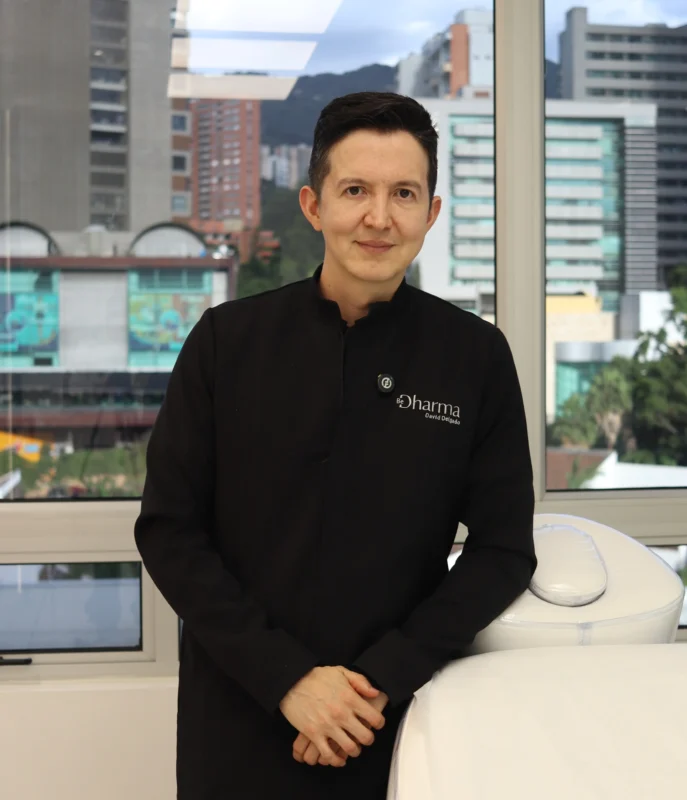
When comparing forehead reduction vs hair transplant, I encourage patients to look beyond the immediate aesthetic change.
Your natural hairline, scalp elasticity, donor density, potential future hair loss, and facial anatomy all influence which treatment may be appropriate.
The objective should not be to achieve the lowest possible hairline, but to make a responsible decision that respects your individual characteristics and long-term expectations.
Whether you are considering forehead reduction with me or exploring hair restoration at Be Dharma Hair, a personalized medical evaluation is the most appropriate first step.
Frequently Asked Questions About Forehead Reduction vs Hair Transplant
Is forehead reduction better than a hair transplant for a high hairline?
Not necessarily. If your hairline is naturally high, stable, and your scalp has sufficient elasticity, forehead reduction may be worth considering. If your hairline has receded or you want to restore hair in specific areas, transplantation may offer a different solution. The choice depends on a medical assessment, not on which procedure is generally considered better.
How much can forehead reduction surgery lower the hairline?
There is no universal measurement that applies to every patient. The amount of reduction depends on scalp elasticity, forehead anatomy, previous procedures, and the tension that would be required to reposition the tissues. During the consultation, I assess these factors before discussing a realistic surgical plan.
Can men undergo forehead reduction surgery?
Yes, selected male patients may qualify for forehead reduction. However, the possibility of future male-pattern hair loss requires particular attention. If the frontal hairline continues receding after surgery, the incision scar may become more visible. This makes assessment of hairline stability especially important.
Can a hair transplant make my forehead smaller without removing skin?
Yes. A hair transplant can create the appearance of a smaller forehead by establishing a lower frontal hairline using transplanted follicles. However, it does not physically shorten the forehead or advance the scalp. The achievable result depends on donor availability, hair characteristics, the desired shape, and the number of viable grafts.
What happens if I continue losing hair after either procedure?
Future hair loss can affect the appearance of both results. After forehead reduction, progressive recession may change the relationship between the hairline and surgical scar. After transplantation, existing non-transplanted hair may continue thinning, potentially requiring medical treatment or additional planning. A diagnosis and long-term strategy are particularly important when hair loss is ongoing.
Which procedure creates a more natural-looking hairline?
Both procedures can produce natural-looking changes when appropriately selected and planned. Forehead reduction preserves and advances the patient’s existing frontal hairline, while transplantation allows individual follicles to be positioned to reconstruct its shape. The outcome depends on factors such as hair density, growth direction, facial proportions, surgical technique, and healing.