
If you’re considering a breast lift, I know one question tends to come up before anything else: does breast lift leave scars? It’s a fair concern—because this isn’t just about lifting the breast, it’s also about how you’ll feel when you see your body healing in the mirror.
The honest answer is yes: a breast lift (mastopexy) typically leaves scars because it requires carefully placed incisions to reshape and elevate the breast. However, what matters most is how those incisions are planned and closed, as well as your skin quality, your genetics, your aftercare, and the time you give your body to heal. In this guide, I’ll walk you through where breast lift scars are usually located depending on the technique, what they tend to look like as they mature, how I work to minimize them, what you can do to support better healing, and what options exist if a scar doesn’t evolve the way we expect.

What Is a Breast Lift (Mastopexy) and Why Does It Create Scars?
When patients ask me about a breast lift, they’re usually describing a very specific feeling: “My breasts don’t look where they used to, and my bras don’t fit the same.” A mastopexy is the procedure I use to lift and re-center the breast, improve its shape, and restore a more balanced position on the chest. In simple terms, I’m not “making a new breast”—I’m reshaping what you already have: I reposition the tissue, refine the contour, and, when necessary, adjust the nipple–areola complex so it sits naturally on the newly lifted breast.
What breast lift changes?
To make this easier to visualize, here’s what I’m typically addressing during a mastopexy:
- Position: the breast sits higher and looks more supported.
- Shape: the breast can look firmer and better contoured (especially in the lower pole).
- Nipple–areola alignment: if it has descended, I reposition it to match the new breast shape.
- Skin envelope: I reduce excess skin so the breast can hold its lifted position.
Why do scars happen in mastopexy?
Now, the reason why scars happen is very straightforward: a lift requires incisions, and every incision heals by forming scar tissue. The question does breast lift leave scars comes up so often because scars are not a “side effect”—they are part of the surgical pathway that allows the lift to happen.
Here’s the logic I explain in consultations:

- If the skin is stretched and the breast sits lower, we need to remove excess skin.
- If we remove skin, we must close the skin edges.
- When skin edges heal, the body creates a scar along that line.
What matters (and what changes everything) is not whether a scar exists, but:
- Where it’s placed
- How much tension it carries
- How your skin heals
- How well the aftercare is followed
- How much time you give the scar to mature
What mastopexy does not do (so expectations stay realistic)
A breast lift is powerful, but it’s not a “one-procedure-fixes-everything” solution. I’m always very transparent about this:
- It doesn’t automatically add volume.
If your main goal is more fullness, especially in the upper part of the breast, we may discuss an implant or fat transfer separately. A lift reshapes and repositions—volume is a different conversation. - It doesn’t stop future changes.
Pregnancy, breastfeeding, weight fluctuations, and aging can still influence your results over time. A well-performed lift can hold beautifully, but your body will keep evolving.
Does Breast Lift Leave Scars Even With “Minimal Scar” Techniques?
Yes—does breast lift leave scars is still true even when you see terms like “minimal scar,” “short-scar,” or “scarless lift” online. I want to be very clear and ethical here: there is no such thing as scar-free mastopexy. What does exist is scar optimization.
How I explain “minimal scar” in real terms
Think of it like this:
- “Minimal scar” does not mean “no scar.”
It means choosing an incision pattern that’s as limited as possible while still achieving a safe, stable lift. - The right technique depends on your anatomy.
If a surgeon tries to force a “tiny scar” approach on a breast that needs more reshaping, the skin closure can end up under too much tension—ironically increasing the risk of wider, thicker, or more noticeable scars.
Read more Breast Lift Without Implants in Medellin, Colombia
Where Are Breast Lift Scars Located?
When someone asks me does breast lift leave scars, what they’re really asking is: “Where will I see them, and how noticeable will they be in my daily life?” And that’s exactly how I approach planning a mastopexy. Scars are part of the procedure, yes, but their placement is intentional. I choose the incision pattern based on how much lift you need, how your skin behaves, and what kind of shape we’re trying to achieve safely.

Breast Lift Scar Placement by Technique
In simple terms, there’s always a trade-off between lifting power and scar length. If a patient needs a small correction, I can often use a more limited incision. On the other hand, when there’s significant laxity, forcing a “tiny scar” approach can create excessive tension on the closure—and that’s one of the quickest ways to end up with a scar that heals wider or more visible than it needed to be. The goal isn’t the shortest scar; it’s the scar that heals best
Periareolar (Donut) Mastopexy Scars
With a periareolar lift, the scar sits around the edge of the areola, right where the natural color change helps camouflage it. This is why many patients ask me, “Does a breast lift leave scars around the areola?”—and in this technique, yes, that’s exactly the design. It can be a good option when the lift required is limited and the skin quality is strong enough to support the reshaping without heavy tension. However, it’s not the right choice for everyone: if we try to achieve too much lift through an areola-only incision, the skin can be pulled too tightly, increasing the risk of areola widening or a scar that stretches and becomes more noticeable over time.
Vertical (Lollipop) Mastopexy Scars
The vertical (lollipop) pattern combines a scar around the areola with a vertical line down to the breast crease. In my experience, this is one of the most balanced techniques because it allows meaningful reshaping and lift while keeping the scar pattern relatively controlled. It’s often suitable for moderate sagging where we need more than a subtle adjustment, but we don’t necessarily need the full extent of an anchor incision. The trade-off is that you will have a visible vertical scar early on, yet as it matures, it frequently becomes much less prominent, especially because its location tends to be covered by most bras and swim tops.
Wise Pattern (Anchor) Mastopexy Scars
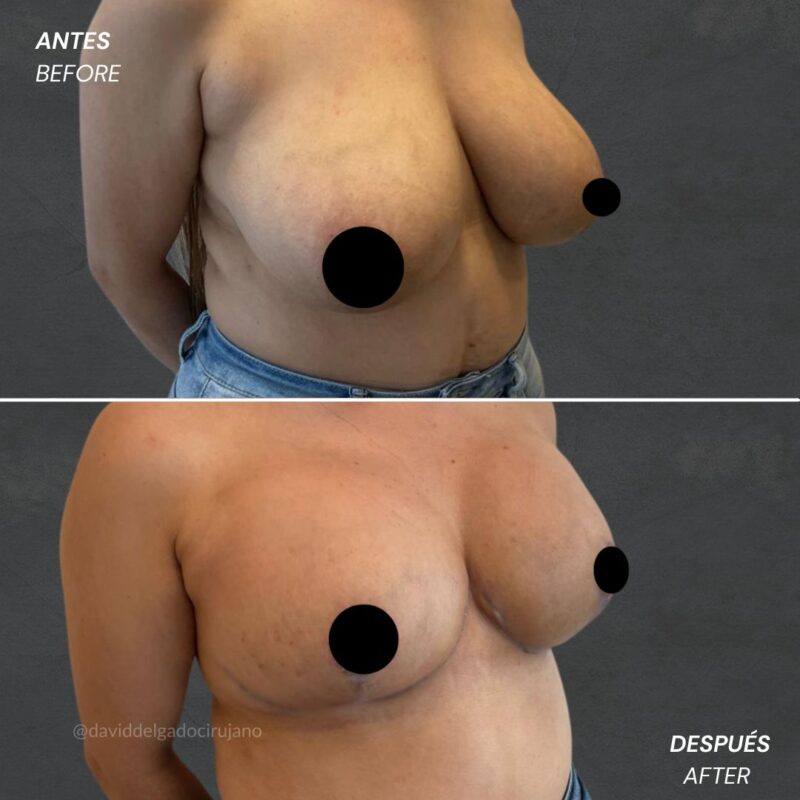
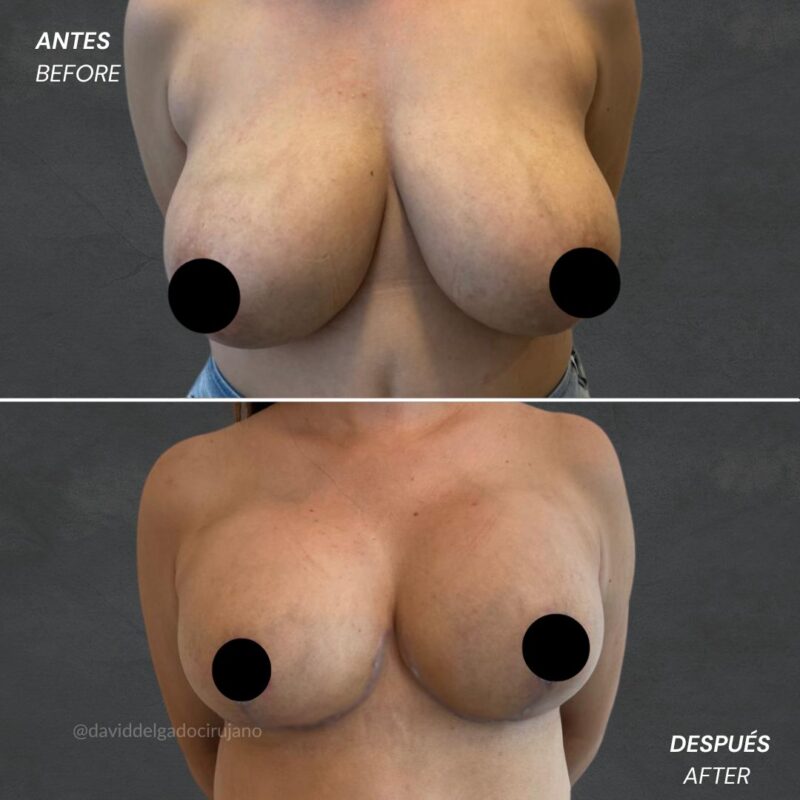
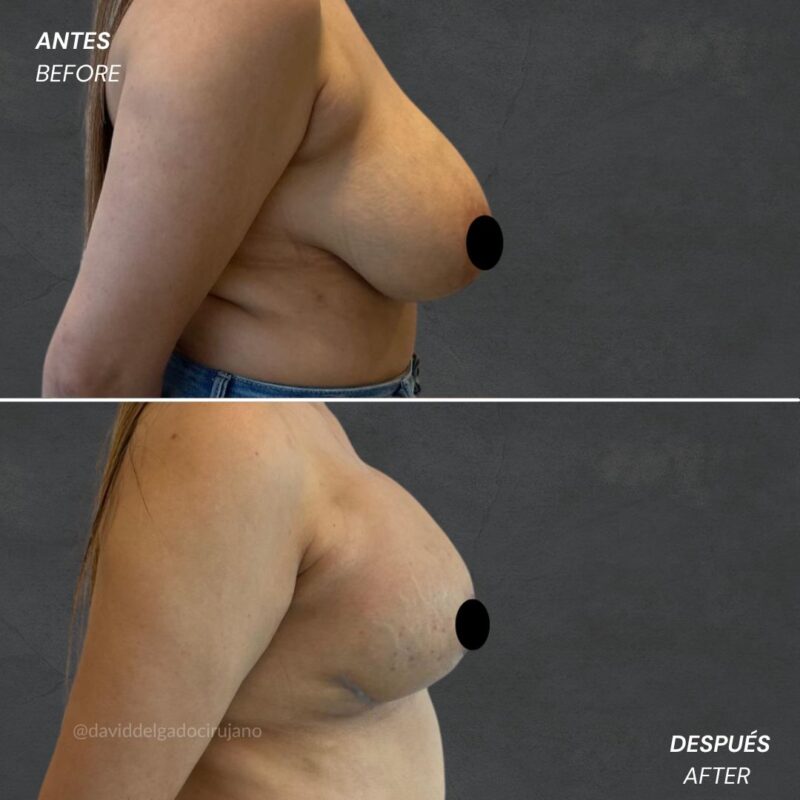
When a patient needs more significant lifting and skin tailoring, the Wise pattern (anchor) approach may be the most reliable option. This pattern includes the areolar scar, the vertical line, and an additional scar hidden along the inframammary fold (the crease under the breast). I know the idea of an extra line can sound intimidating, but it’s important to understand why it exists: when there’s more excess skin to remove or more reshaping to do, that crease incision lets me refine the breast envelope with better control and less tension on the closure. And tension matters—because tension is one of the factors that can make scars wider. So, while the anchor pattern is the most extensive in terms of scar length, it can also be the best choice for achieving a stable lift and a well-supported shape when anatomy calls for it.
Short-Scar / Scar-Reducing Approaches
You’ll often see terms like “short scar” online, and I understand why patients search for that. But I always frame it honestly: “short-scar” is not a guarantee—it’s a strategy. It depends on your breast shape, skin elasticity, and the degree of ptosis (sagging). When it’s appropriate, I aim to use the least extensive incision that still allows a safe, predictable lift and a low-tension closure. That’s the real formula for a scar that heals well. In other words, yes, we can often optimize scar length, but I won’t promise “tiny scars” if it compromises your result. The most important question isn’t just does breast lift leave scars, but whether the chosen technique gives you the best chance of scars that soften and fade nicely over time.
What Do Mastopexy Scars Look Like Over Time? Healing Timeline + Factors
One of the biggest mistakes I see especially from what people read online is expecting scars to look “finished” too early. Scar maturation is a biological process, and when you understand that timeline, everything becomes less stressful.
Breast Lift Scar Healing: What to Expect Month by Month
In the first weeks (roughly 0 to 6 weeks), it’s completely normal for scars to look pink or red, feel a bit firmer than the surrounding skin, and even be more noticeable than you expected. There can also be swelling, sensitivity, and tightness around the incision lines as the tissue heals and collagen builds. Then, from about 6 weeks to 6 months, many scars start to flatten and lighten gradually. Texture changes are common, and you might notice that scars seem to improve, then look slightly more visible again, then improve—this “up and down” is often part of normal remodeling. Finally, over 6 to 18 months, scars usually soften further, the color becomes less intense, and the final appearance becomes clearer.
And this is where I reassure patients directly: if you’re early in recovery and you find yourself repeating the same thought—does breast lift leave scars—remember that early scars are not the result. Time is not just “waiting”; it’s part of the healing.
Why Some Breast Lift Scars Heal Better Than Others
Scar quality is influenced by a mix of surgical planning and individual biology. From the surgical side, I focus heavily on incision placement and closure technique because tension plays a major role in whether a scar stretches or stays fine. From the patient side, factors like skin quality, genetics, and pigmentation tendencies can influence how visible a scar becomes. Lifestyle factors matter too: nicotine exposure can reduce blood flow and worsen healing, nutrition affects tissue repair, and sun exposure can darken scars and slow fading. Also, things like infection, small wound separations, or returning to intense activity too soon can change how a scar matures—sometimes in ways we can avoid with the right guidance and follow-up.
When Scars Become a Concern (Hypertrophic Scars & Keloids)
Most mastopexy scars mature normally, but there are cases where scars become thicker or more noticeable. A hypertrophic scar is a raised scar that stays within the original incision boundaries, while a keloid can extend beyond them. Not everyone is prone to these patterns, and the best predictor is often your own history: how you’ve healed from prior surgeries, deep cuts, or even piercings. That’s why I discuss scar tendencies before surgery—so we can anticipate risk and monitor healing closely, especially in the early months when proactive management can help.
How to Help Breast Lift Scars Heal Well (Patient Aftercare Principles)
I like to keep aftercare principles simple and consistent because scar improvement is about steady habits, not aggressive interventions. First, follow your surgeon’s wound-care plan precisely—timing and technique matter. Once incisions are fully closed and you’re cleared, silicone-based scar support is commonly used, and sun protection is essential because UV can make scars more noticeable. When appropriate and cleared, gentle scar massage can also help with softness and flexibility. Finally, I strongly emphasize avoiding nicotine and protecting the incisions from unnecessary tension—support garments and activity limits are not just about comfort; they’re part of giving your scars the best environment to heal.
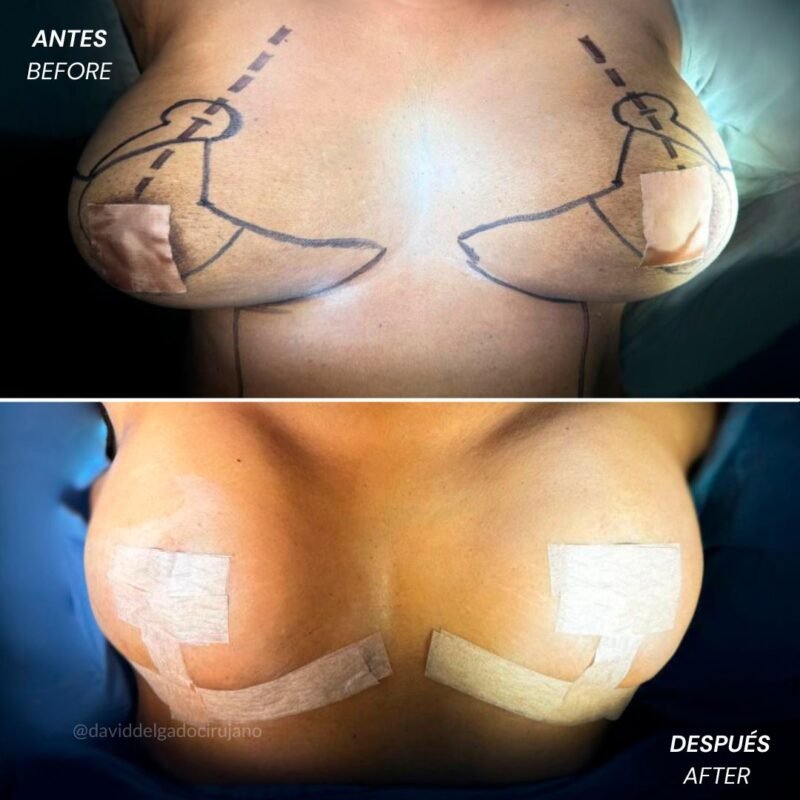
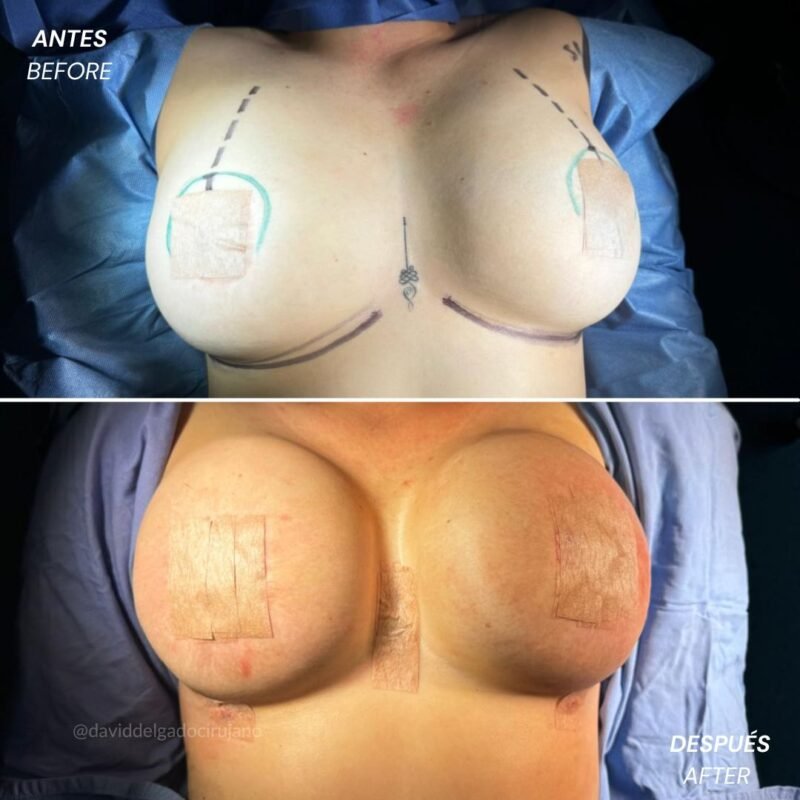
Ready to Take the Next Step? Book Your Mastopexy Consultation in Medellín, Colombia
If you’re considering a breast lift and want to understand your options for achieving a natural, beautiful result with minimal scarring, I invite you to schedule a consultation with me. During our meeting, we’ll discuss your unique anatomy, goals, and any concerns you may have about does breast lift leave scars. I’ll guide you through the process, explain the best incision patterns for your body, and set realistic expectations for the healing journey.
With my experience in performing mastopexy surgeries at Interquirófanos (JCI-accredited), located in Torre Médica Oviedo, you can trust that you’ll be in good hands from start to finish. I also work with patients from around the world, providing clear, personalized care—whether you’re here in Medellín or joining us from abroad.
Click below to book your consultation, and let’s start discussing how a breast lift can help you feel more confident and comfortable in your body.
Schedule Your Consultation Now
Choosing a Surgeon Matters: Scar Planning, Technique, and Safety

When patients come to me for a breast lift, I remind them that scars don’t depend only on “how you heal,” but also on how the surgery is planned and executed. I choose the incision pattern that achieves the lift you truly need while placing scars in the most discreet zones possible, based on your breast shape, skin laxity, nipple position, and goals. I’m always honest about trade-offs, because a “smaller scar” technique isn’t always the option that heals best—my priority is a natural, stable result with scars that can mature nicely over time.
I’m located in Torre Médica Oviedo in Medellín, and I perform surgeries at Interquirófanos (JCI-accredited), with strict safety protocols, an experienced anesthesia team, and careful perioperative planning. My background includes UIS and the Universidad de Antioquia, and I follow professional standards through the SCCP, ASPS, and the regulatory framework of the Ministerio de Salud. I also work with national and international patients, so I prioritize clear education, realistic expectations, and structured follow-up, including virtual guidance when it helps you feel supported throughout recovery.
FAQs — Does Breast Lift Leave Scars? (Mastopexy)
Does breast lift leave scars in every case?
Yes. A breast lift (mastopexy) requires incisions to reposition and reshape the breast, and every incision heals by forming a scar. What varies is where the scars are placed, how well they heal, and how noticeable they become over time. My role is to choose the technique that fits your anatomy and to close tissues in a way that supports low tension and predictable healing.
Where will my breast lift scars be located?
Scar location depends on the incision pattern needed for your degree of sagging and skin laxity. Common locations include around the areola (periareolar), around the areola plus a vertical line to the breast crease (vertical/lollipop), or those two plus a line hidden in the breast fold (anchor/Wise pattern). During consultation, I will explain the exact pattern I recommend and why.
Which breast lift technique leaves the least visible scars?
In general, the least extensive scar pattern is the one used for mild sagging, often a periareolar approach. However, “least visible” doesn’t always mean “shortest.” If a short-scar technique is used when you need more lift, the closure can carry too much tension and the scar may widen. The best-looking scars usually come from the right technique for your anatomy, not the smallest incision on paper.
Do breast lift scars fade completely?
Most scars fade significantly, but they rarely disappear 100%. Typically, they become flatter, softer, and lighter in color as they mature. The final appearance depends on genetics, skin type, scar history, sun exposure, and post-op care. My goal is to plan scars in discreet areas and guide healing, so they become a minor detail rather than the focus.
How long does it take for breast lift scars to look “better”?
Scars go through stages. Early scars can look red or more noticeable in the first weeks, then gradually soften and fade. Many patients see meaningful improvement over the first few months, but the scar maturation process often continues for 6 to 18 months. That’s why I encourage patience: early appearance is not the result.
What can make breast lift scars worse or more noticeable?
The most common factors include excessive tension on the incision (from technique mismatch or early strain), nicotine exposure, sun exposure, infection, delayed wound healing, and returning to intense activity too soon. Genetics and your natural scaring tendencies also matter. In follow-up visits, I watch healing closely to catch issues early and reduce the chance of long-term scar problems.
Am I at risk for thick scars or keloids after a breast lift?
Some people are more prone to hypertrophic scars or keloids, often based on personal or family history and skin tendencies. If you’ve developed thick scars in the past (from surgery, injuries, or piercings), it’s important to discuss that before surgery. When risk is higher, we plan proactively and monitor healing more closely.
Can I do anything to help my scars heal well after mastopexy?
Yes, your role is important. The biggest principles are follow your surgeon’s wound-care instructions, avoid nicotine, protect the incisions from tension, and use scar-support strategies only when you’re cleared (commonly silicone-based products and strict sun protection). When appropriate, gentle scar massage may be recommended later in healing. The key is timing and consistency, not aggressive treatments.
What if I don’t like my scars after a breast lift—are there treatments?
Yes. If scars heal thicker, darker, or wider than expected, there are several options depending on the issue: medical-grade topical regimens, silicone therapy, steroid injections for hypertrophic scars, and energy-based treatments like laser in selected cases. In some situations, surgical scar revision may be considered—but only after scars have matured and we understand the pattern clearly.
Does combining a breast lift with implants change the scarring?
The scar pattern for the lift is still determined by the amount of sagging and skin excess; implants don’t automatically reduce the need for mastopexy scars. In fact, combining procedures can add complexity because we’re balancing volume, shape, and tissue tension. When indicated and planned properly, the combination can be a great option—but it requires careful technique selection and clear expectations about scarring and healing.