
Many patients come to my practice seeking a solution for upper abdominal laxity—an area that often remains unchanged despite exercise, weight loss, or previous cosmetic procedures. If this sounds familiar, you may benefit from a reverse tummy tuck, a specialized technique designed to refine the upper abdomen and restore natural definition with precision and safety.
What is a reverse tummy tuck?
A reverse tummy tuck is a specialized surgical technique designed to improve laxity and excess skin in the upper abdomen, an area that often does not respond to diet, exercise, or even traditional abdominoplasty. Instead of tightening skin downward—as in a standard tummy tuck—this procedure elevates and repositions the tissues upward, using carefully placed incisions hidden along the natural folds beneath the breasts. For many patients, it provides a more refined abdominal contour while preserving a natural appearance and ensuring the integrity of surrounding structures. As with all abdominal procedures, the goal is to achieve balance, harmony, and long-lasting results through meticulous surgical planning and patient-centered care.
You might be interested: Lipo laser vs liposuction: which is the best option?
How a reverse tummy tuck differs from a traditional tummy tuck
| Feature / Aspect | Reverse Tummy Tuck | Traditional Tummy Tuck |
|---|---|---|
| Target Area | Upper abdomen | Lower abdomen |
| Skin Direction of Tightening | Lifted upward | Pulled downward |
| Incision Location | Inframammary fold (breast crease) | Low horizontal incision near the pelvis |
| Muscle Repair | Usually not needed | Often includes diastasis recti repair |
| Ideal For | Upper abdominal laxity or excess skin | Lower abdominal skin excess, muscle separation |
| Combination Options | Often combined with breast surgery | Commonly combined with liposuction |
| Scar Visibility | Hidden beneath the breast fold | Hidden by underwear or swimwear |
This comparison helps clarify that each technique addresses different anatomical needs, allowing a more personalized approach depending on the patient’s goals.
Who benefits most from reverse tummy tuck?
Patients who may be ideal candidates for a reverse tummy tuck include:
- Individuals with loose or excess skin in the upper abdomen that does not improve with exercise.
- Patients who have undergone a previous tummy tuck but still have laxity in the upper abdominal region.
- Candidates experiencing skin redundancy after significant weight loss.
- Patients considering breast surgery, since both procedures can be safely combined using the same incision.
- People seeking a more defined and lifted upper abdominal contour without the need for traditional muscle repair.
- Individuals with good overall health, stable weight, and realistic expectations about scarring and recovery.

Reverse tummy tuck procedure explained
A reverse tummy tuck is performed with a focus on precision, natural contouring, and preservation of healthy tissue. The procedure primarily addresses excess upper abdominal skin by lifting it upward toward the breast crease. Because this area is anatomically different from the lower abdomen, the surgical plan is highly individualized.
Surgical technique and incision placement
The procedure typically begins with an incision placed discreetly along the inframammary fold, the natural crease beneath the breasts. This incision allows access to the upper abdominal tissues, enabling the surgeon to elevate and remove excess skin while maintaining a harmonious transition between the chest and abdomen.
In selected patients, the technique can be adapted to achieve greater tightening or combined with liposuction for enhanced contouring. Throughout the surgery, meticulous attention is given to tissue handling, vascular preservation, and layered closure—key elements that support smoother healing and a more refined final appearance.
Understanding the reverse tummy tuck scar
One of the most common questions patients ask is how visible the scar will be. In a reverse tummy tuck, the scar is intentionally placed within or just beneath the breast crease, allowing it to remain naturally concealed—even when wearing swimwear or low-cut clothing.
Scar quality depends on several factors, including skin type, healing characteristics, postoperative care, and adherence to medical recommendations. Most patients experience progressive softening and fading of the scar over time, especially when supported with silicone therapy, sun protection, and customized follow-up treatments when needed. My goal is always to achieve a discreet, well-healed scar that complements the overall result.
Book your virtual evaluationReverse tummy tuck before and after
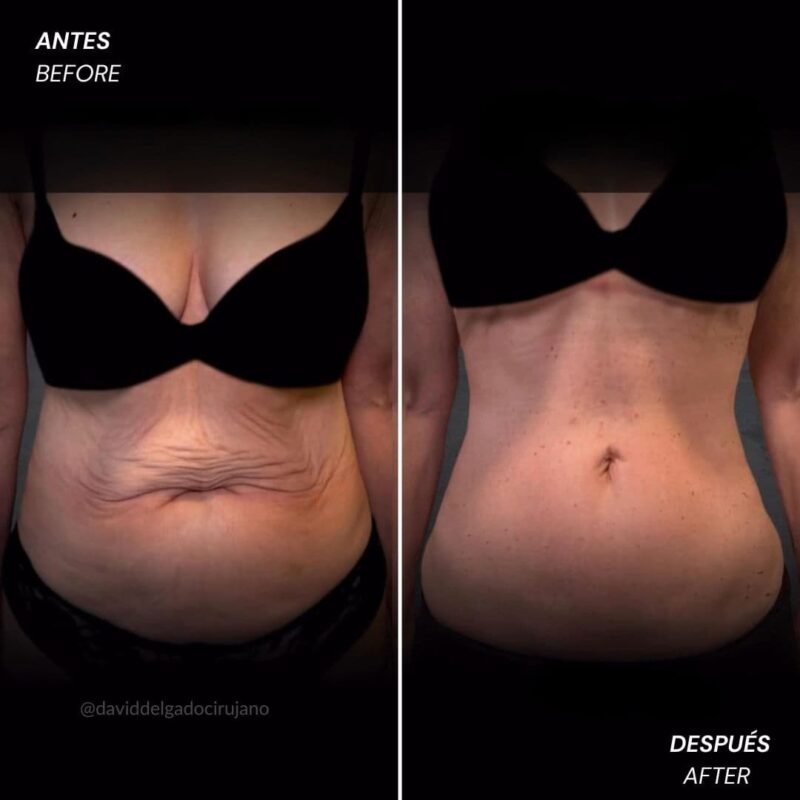
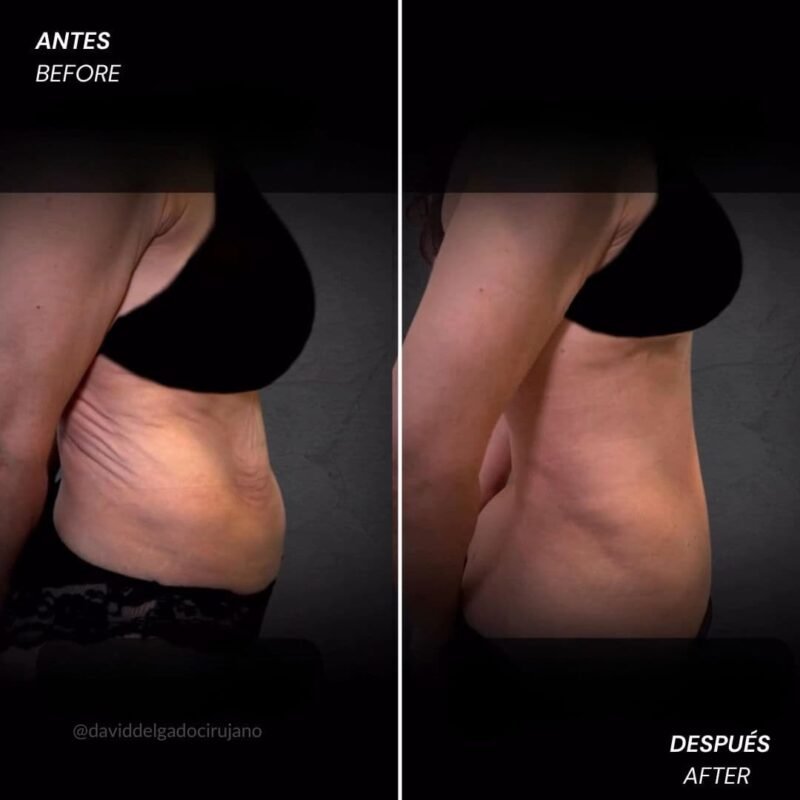
Before-and-after photographs offer valuable insight into the potential changes a reverse tummy tuck can achieve. They highlight how lifting and refining the upper abdominal tissue can restore definition, improve skin tone, and create a smoother transition between the chest and midsection. While these comparisons are extremely helpful for visualizing results, they should always be interpreted with realistic expectations and guided by professional evaluation.
What to expect from reverse tummy tuck before and after pics
When reviewing reverse tummy tuck before and after images, you can expect to see improvements in:
- Upper abdominal tightening, with excess skin lifted toward the breast crease.
- A more defined upper torso, especially when laxity or sagging was previously present.
- Refined contours, often enhanced when liposuction is performed alongside the procedure.
- A smoother abdominal surface, with visible reduction in skin redundancy.
It’s important to remember that photos cannot fully capture internal tissue quality or the patient’s personal goals, but they do offer a clear reference for what the surgery is designed to improve.
Real case: reverse tummy tuck before and after pics
Below is a placeholder block where real clinical images from Dr. David Delgado’s practice can be displayed. These should only be published with patient consent and following ethical standards.
Reverse tummy tuck recovery
Recovery after a reverse tummy tuck is a gradual and structured process designed to protect the surgical repair, support healing, and ensure the most refined final result. Although each patient’s timeline may vary, most follow a predictable sequence of milestones. Clear postoperative guidance and consistent follow-up are essential to achieving a safe, comfortable recovery.
Reverse tummy tuck recovery time step by step
During the first week, it’s normal to experience swelling, tightness, and mild discomfort in the upper abdomen. Patients should focus on rest, controlled movement, and wearing the recommended compression garment. Short walks around the house help reduce the risk of blood clots, but strenuous activity must be avoided. Keeping the upper body slightly elevated while sleeping supports wound healing and reduces tension on the incision.
Week 1: Initial healing and inflammation control
Most patients feel noticeably better during week two. Bruising begins to fade, and mobility improves. Light daily activities can resume, such as slow household tasks, but lifting objects, exercise, and abrupt stretching movements must still be avoided. Many patients return to non-physical work at this stage, depending on their comfort and job demands.
Week 2: Early mobility and symptom improvement
By the third and fourth week, swelling continues to decrease, and most people feel more confident resuming normal routines. At this point, gentle walking and low-impact movements are allowed, but upper-body workouts and core exercises should still be postponed. The incision begins to mature, and patients may start scar therapy, such as silicone gel or sheets, as recommended.
Weeks 3–4: Return to routine activities
In the second month, patients typically regain full daily function and may gradually return to more demanding physical activities under medical guidance. Light training can be reintroduced, but high-intensity exercise and heavy lifting should be approached cautiously. The abdominal contour becomes more defined as residual swelling diminishes.
Month 2: Increased activity and refinement of results
Between three and six months, most swelling has resolved, and the upper abdomen appears smoother and more refined. At this stage, patients generally resume all physical activities. The scar begins to fade and soften, especially with consistent care, sun protection, and adherence to follow-up visits.
Months 3–6: Stabilization of results and scar maturation
By one year, the final outcome is typically visible. The scar has matured significantly, the abdominal contour is stable, and tissues have fully adapted to their new position. Patients who maintain a stable weight and healthy lifestyle enjoy long-lasting results.
Months 6–12: Final results
Reverse tummy tuck price
Understanding the cost of a reverse tummy tuck is an important part of planning your treatment. In Colombia, patients—both local and international—often find that medical procedures offer exceptional value without compromising safety, expertise, or surgical outcomes. This balance between accessibility and high-quality care has positioned the country as a trusted destination for aesthetic surgery.

Reverse tummy tuck price compared to the U.S., Canada, and Europe
The reverse tummy tuck price in Colombia is significantly lower than in countries such as the United States, Canada, and many parts of Europe. This difference is primarily due to currency exchange rates and the lower overall cost of medical infrastructure—not because of reduced quality. Patients benefit from world-class surgical care at a fraction of the cost they would expect in North America or Europe, making Colombia an attractive option for those seeking safe, ethical, high-standard procedures.
Why the reverse tummy tuck price in Colombia remains affordable without lowering quality
Although the reverse tummy tuck price is more accessible here, the standards of care remain exceptionally high. My practice follows rigorous surgical protocols, prioritizing patient safety, scientific evidence, and personalized planning. Colombia’s cost advantage allows patients to access premium medical services while maintaining international-level safety and outcomes. The affordability is economic—not clinical.
Reverse tummy tuck price and the importance of a board-certified plastic surgeon
When evaluating the reverse tummy tuck price, it’s essential to consider the surgeon’s credentials. As a member of the American Society of Plastic Surgeons (ASPS) and a board-certified plastic surgeon, I adhere to global best practices and continuous medical education. These credentials reflect a commitment to excellence, ensuring that the care you receive matches the standards of top-tier surgical centers worldwide.
How accredited facilities influence reverse tummy tuck price and safety
Another factor that elevates the value of the reverse tummy tuck price in Colombia is the quality of the surgical facilities. All procedures are performed at Interquirófanos, a center accredited by the Joint Commission International (JCI)—the highest global standard for healthcare quality and patient safety. This accreditation ensures strict protocols, sterile environments, and comprehensive emergency readiness equivalent to leading hospitals in the United States and Europe.
Choosing a JCI-accredited facility means patients receive world-class care while still benefiting from the cost advantages that Colombia offers.
You might be interested: Breast Lift Without Implants in Medellin, Colombia
Reverse tummy tuck in Colombia: start your transformation with expert care
Choosing where to undergo your surgery is just as important as choosing the right procedure, and Colombia has become a trusted destination for thousands of patients from around the world seeking high-quality aesthetic care at accessible prices. Every year, individuals from the United States, Canada, Europe, and beyond travel here to work with experienced, board-certified surgeons—professionals who combine advanced training, ethical practice, and personalized attention.
If you are considering a reverse tummy tuck in Colombia, my team and I are here to guide you from the very first step. We begin with a virtual consultation, where I evaluate your case personally, answer your questions, and help you understand whether this procedure aligns with your goals. From there, our international patient coordination team supports you with every detail, ensuring a smooth, safe, and stress-free experience.
Schedule your virtual appointment for a reverse tummy tuck in Medellín
As a member of the American Society of Plastic Surgeons and a surgeon operating in a Joint Commission International–accredited facility, I prioritize safety, transparency, and natural results. My goal is to provide you with the same level of care you would expect in leading medical centers worldwide—while allowing you to benefit from Colombia’s cost advantages and warm patient-focused approach.
If you’ve been thinking about refining your upper abdomen and regaining confidence in your body, now is the perfect time to take the first step.
Reverse tummy tuck in Colombia: start your transformation with expert care
The reverse tummy tuck scar is placed along the natural crease beneath the breasts (inframammary fold), allowing it to remain discreet and typically concealed even with swimwear or low-cut clothing. With proper care—including silicone therapy and sun protection—the scar often softens and fades significantly over time.
Where is the reverse tummy tuck scar located, and how visible is it?
Before-and-after results typically show a smoother, tighter upper abdomen with reduced skin laxity. Patients often notice improved contour and a more defined transition between the chest and midsection. While results vary by anatomy, the goal is always natural, harmonious refinement.
What changes can I expect in reverse tummy tuck before and after results?
When reviewing images, look for standardized poses, consistent lighting, and natural-looking results. Ensure the photos come from board-certified plastic surgeons and are shared with patient consent. These images give a realistic idea of what the procedure can accomplish, but individual results always depend on personal anatomy.
How should I evaluate reverse tummy tuck images when researching the procedure?
Recovery is gradual, with most patients resuming routine activities within 2–4 weeks and full exercise by 6–8 weeks. Swelling continues to improve over several months. Following postoperative instructions, wearing compression, and avoiding strenuous movements early on are key to a smooth recovery.
What is reverse tummy tuck recovery like and how long does it take?
Yes—these photos provide helpful examples of how the procedure lifts and refines the upper abdomen. However, they should be viewed as general references. A personalized assessment is essential, since factors like skin elasticity, surgical goals, and overall anatomy vary from patient to patient.
Are reverse tummy tuck before and after pics useful for understanding my potential results?
The price depends on surgical complexity, medical facility standards, anesthesia, and postoperative care. In Colombia, the cost is lower due to currency exchange rates—not due to reduced quality. I operate in a Joint Commission International–accredited facility and am a member of the ASPS, ensuring world-class care at accessible rates.
What affects the reverse tummy tuck price, and why is Colombia more affordable?
A reverse tummy tuck tightens the upper abdomen by lifting excess skin upward toward the breast crease. In contrast, a traditional tummy tuck focuses on the lower abdomen and may include muscle repair. The reverse version is ideal for patients with isolated upper abdominal laxity.
What is a reverse tummy tuck, and how does it differ from a traditional tummy tuck?
Most initial healing happens within the first 2–3 weeks, with patients returning to daily activity relatively quickly. Full maturation of the scar and final contour typically takes 6–12 months. Following surgeon guidance closely ensures the safest, most comfortable recovery process.
What is the expected reverse tummy tuck recovery time from start to finish?